BRM Community
Click here for:
BRM Communities

How DCMA Put Business Relationship Management to Work | Case Study
Those BRMs soon found the root problem: nobody owned the work of getting requests ready for a decision. Instead of building a parallel structure, they stepped in to reconstitute the agency’s capability boards. They didn’t have decision authority. Their job was to make sure every request reaching a board was clear, complete and tied to strategy.
Introducing ALIGN: BRM Meets AI
AI is changing everything about how organizations work. It’s changing nothing about what makes a great BRM. AI cannot navigate relationships, bridge strategy and execution, or earn trust with anxious business partners. That’s still your job, and it’s more important than ever.
But without the right literacy, language, and confidence, BRMs end up on the sidelines of the most important conversations in their organizations. ALIGN changes that. ALIGN is about where the BRM role goes from here, and how you lead that evolution
Introducing REMI: The Only AI Coach Built on the Source of Truth for BRM
Ask a general-purpose AI tool about business relationship management and you’ll get a general answer. It may sound confident, and even be partly right. But where did it come from? All other AI tools draw on everything they have been trained on, blog posts, forum threads, public frameworks, even well-meaning guesswork. For the BRM discipline, where proven practices matter, “sounds about right” isn’t good enough. When you’re preparing for a conversation with a senior executive, working to demonstrate value to your business partners, or even studying for the BRMP®, you need guidance built on something solid. That’s why we built REMI. The only AI coach and agent that is built on the BRM Body of Knowledge (BRMBOK®), the foundation of the BRM discipline.
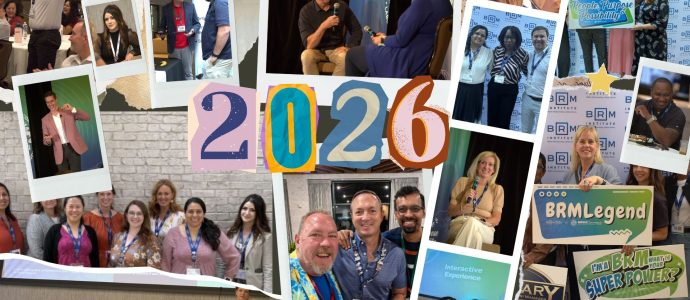
The 2026 BRMConnect: Three Days that Redefine What BRM Can Do
Another World BRMConnect is in the books, and what a week it was! Business Relationship Managers from around the globe gathered in Denver for three days of learning, connection, and more than a few laughs. From Malini Jayaganesh’s opening keynote on building momentum that lasts, to storyteller sessions on trust, technology, and the human side of AI, to a closing reminder that leadership starts with you, one thread ran through it all: technology keeps changing, but it’s people and the relationships between them that make everything work. Here’s a look back at three days that redefined what BRM can do, and the big news about where we’re headed in 2027.
The 2026 Global BRM Community Excellence Award Winners
We are thrilled to announce this year’s Global Excellence Award winners — the most prestigious recognition within the Business Relationship Management (BRM) community. These awards celebrate the professionals who go above and beyond to advance the practice of BRM, drive meaningful business value, and strengthen relationships across their organizations. This year’s recipients were nominated by their peers for their outstanding, positive impact on the global BRM community — a true testament to the trust and respect they’ve earned from colleagues who see their leadership firsthand. From driving strategic alignment to championing innovation within their organizations, these winners exemplify what it means to lead with purpose in the BRM profession. Please join us in celebrating this year’s Global Excellence Award winners live at the 2026 World BRMConnect Conference, taking place September 21–23, 2026 in Denver, Colorado. Winners will be honored on stage in front of peers, colleagues, and leaders from across the BRM community — don’t miss this powerful moment of recognition and celebration.
Want to know who won?

One Ring to Rule Them All: What Lord of the Rings Teaches Every Business Relationship Manager in the Age of AI
If you’re new here: a Business Relationship Manager is the person whose job is to sit at the intersection of “the business” and “the people who build the thing the business needs” — usually IT, but increasingly AI, data, and product teams too — and make sure those two groups actually trust and understand each other. Not just talk. Trust. Picture it: representatives from every major faction in Middle-earth, each with their own priorities, budgets (armies), and deeply held grudges, summoned to solve one enormous cross-functional problem. Sound like your Monday planning meeting? The Council of Elrond only works because relationships were built long before the crisis. Gandalf didn’t show up to that meeting cold-calling strangers. He’d spent years earning trust with Elrond, with the Hobbits, with Aragorn. By the time the Ring needed a plan, the relationship equity was already in the bank.

Stop Measuring Relationship Roles on Documentation. Start Measuring Them on Results.
Most performance systems for people who sit between strategy and delivery are broken. They track documents completed, plans updated, meetings held, and relationships “matured.” The result is a scorecard that rewards process theater while the business still wonders what actually got delivered. We need a different approach. The work of converting strategy and customer needs into measurable results is not a documentation job. It is a leadership discipline. Whether your organization calls these people Business Relationship Managers, strategic partners, value leads, or simply leaders who own the gap between intent and impact — the same progressive standards should apply.

2026 BRMConnect: Speakers, Sessions & Why You Should Attend
Every organization is racing toward AI right now. Fewer are asking the harder question: once the tools are in place, what still has to be human? BRMConnect 2026 is built around the answer — influence, trust, judgment, and the kind of relationship capital that no algorithm can replicate. Whether you’re new to the BRM discipline or leading it from the C-suite, this year’s sessions are designed to arm you with exactly that: the human superpowers AI can’t touch. Attendees move through five tracks, each built for a different stage of the journey — from Mastery & Legacy (building capabilities that outlive any one role or initiative) to Anticipatory Value Orchestration (leading human-AI convergence before it’s demanded of you). Wherever you are in your career, there’s a track built for the problems you’re actually solving right now.

The BRMiBOK in Practice: How Mayo Clinic Made the Case for BRM
The answers came back in the language of relationship. Nursing called their BRM a great navigator and a tremendous strength. Pharmacy praised the traffic control. The Department of Medicine said their BRD brings ideas they had not considered and has been instrumental in bridging business and IT conversations. The leader of Mayo Collaborative Services, home to a major reference lab and biopharma initiative, described the BRD as filling a crucial role in business planning itself.

Salt is Not on the Menu
And here’s the part that matters: smart leaders know it. The best CEOs and CIOs aren’t waiting for the fire report. They’re asking why the building never burned. They understand that the absence of disaster is not an accident — it’s a function. It’s a capability. It’s someone in the room who knew what was coming and moved early. That’s why organizations are reaching for BRM skills faster than ever. The demand is real, it’s growing, and it’s not slowing down. Leaders who have seen BRM work don’t unlearn it. They replicate it.
Find Your Perfect Pathway: Introducing the BRM Personalized Learning Advisor
Professional development should feel like an opportunity, not a puzzle. Yet for many Business Relationship Management professionals, the sheer range of training options available can make getting started — or knowing what comes next — genuinely overwhelming. Which course is right for where you are right now? What credentials should you pursue? How do you maintain what you’ve already earned? Where do you even begin? The BRM Institute has an answer: meet the BRM Personalized Learning Advisor.
BRMs Have Quietly Become the Most Powerful Role in the Enterprise
Organizations don’t always announce when a role becomes indispensable. The shift happens quietly—until suddenly, nothing meaningful moves forward without it. That’s exactly what’s happening with Business Relationship Management. Across industries, the most successful organizations aren’t just running projects—they’re building connected ecosystems of strategy, technology, people, and value. And at the center of that shift? The Business Relationship Manager. This isn’t about influence for influence’s sake. It’s about shaping direction, accelerating decisions, and ensuring investments translate into real results. And increasingly, organizations are realizing that BRMs aren’t expendable roles—they’re essential strategic engines.
Why BRMConnect is the Learning Event that Professionals Can’t Miss
Every year, professionals search for that one event—the experience that changes how they think, how they lead, and how they deliver value within their organizations. BRMConnect is that event. If you’re serious about evolving your BRM practice and strengthening your impact inside your organization, here’s why BRMConnect should be on your calendar. Over 94% of attendees say it was the best learning event of their career. 96% say they were able to immediately apply what they learned in their own practice. 93% say they would recommend bringing their CXO or Executive Leadership to the event. Many conferences leave attendees inspired—but unsure how to apply what they’ve learned. BRMConnect is different. Every session is designed to give participants practical frameworks, tools, and approaches that can be applied the moment they return to work. That’s why nearly every attendee reports putting new ideas into practice immediately.
The CIO’s Practical Guide to Advancing BRM
For years, CIOs have optimized for delivery excellence — uptime, cost control, project execution, cybersecurity resilience. Those capabilities are critical. But they are table stakes. They do not, by themselves, reposition technology as a driver of growth. What changes the narrative is convergence.
Top BRMs 2026
The global BRM community is recognizing the top BRMs that have achieved success through their BRM efforts, strengthened the global BRM community and BRM discipline, enriched lives through excellence in BRM within their organizations, and/or contributed to the community on a local, national, and global level.

BRM: The Efficiency Capability You Already Have
When organizations talk about efficiency, the conversation usually starts in the same place: budgets. When financial pressure increases, leaders seek ways to cut costs, streamline operations, and “do more with less.” Headcount is closely examined. Discretionary spending is put on hold. Efficiency initiatives are launched quickly with good intentions. But here’s the uncomfortable truth: most efficiency efforts focus on where money is being spent, not why work exists in the first place. That distinction matters more than most organizations realize.
Change Doesn’t Fail Because of Technology. It Fails Because of People.
Every organization has a story about change. There’s the new system that didn’t land the way it was supposed to. The transformation initiative that started with energy and optimism, only to quietly stall. The shiny piece of technology that promised efficiency, insight, and growth… and somehow ended up as shelf ware. When these efforts fall short, the explanation is often quick and familiar. The technology wasn’t ready. The tool was too complex. The platform didn’t integrate the way everyone expected.
But the truth is harder to admit. Change rarely fails because of technology. It fails because people were never truly brought along.
The Great Convergence: Where Tech, Business & Humanity Meet
The boundaries among technology, business, government, and the people are increasingly indistinct. Their convergence has created a new governance reality in which digital systems shape institutional behavior, business practices influence public outcomes, and citizens experience the consequences of both. This four-point convergence defines how communities are served, how resources are allocated, and how public trust is sustained.
Within this shifting landscape, the Business Relationship Manager (BRM) occupies a role of rising strategic and civic significance. In public-sector organizations, BRMs operate at the intersection of institutional performance and public accountability.