Everybody’s Doing Their Job. Nothing is Getting Done.

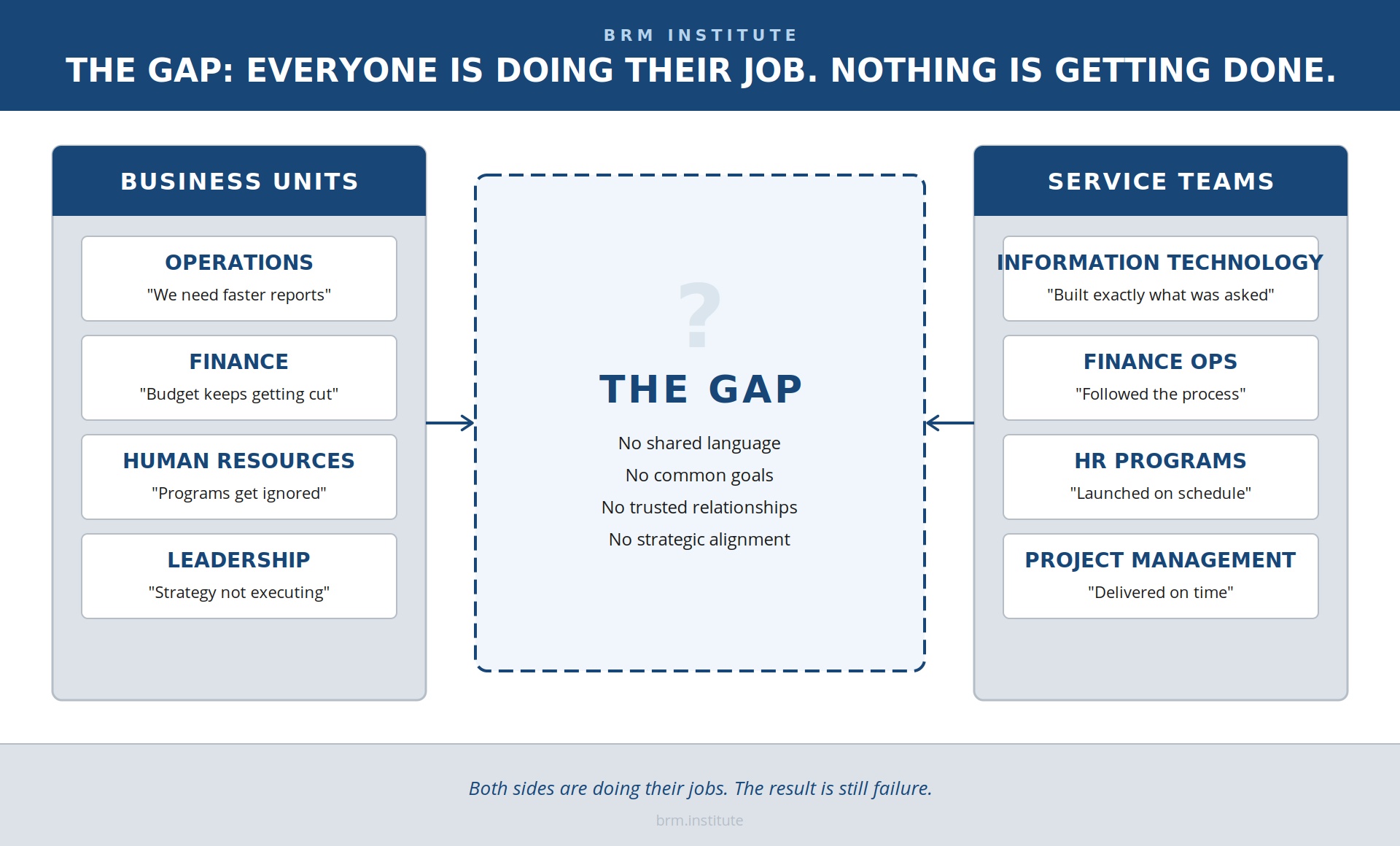
There is a problem that almost every company has, and almost no one talks about directly. It goes something like this: IT builds something nobody asked for. HR rolls out a program that managers ignore. Finance creates a reporting process that the business works around instead of with. Everyone did their job. Nobody got what they needed.
This is not a technology problem. It is not a budget problem. It is a relationship problem.
And Business Relationship Management has always been the answer.
What BRM Actually Is
The concept is not new. Every great leader who ever bridged a gap between departments, every trusted advisor who translated business needs into action, every person who made things work not because of their title but because of the relationships they built — they were doing BRM before it had a name. What has changed is the urgency. In today’s environment, the cost of operating in silos is no longer just inefficiency. It is competitive disadvantage. It is burnout. It is good people and good ideas lost in the space between teams that never learned to truly talk to each other.
That is why now, more than ever, BRM is not optional. It is critical.
Think of it like this. Imagine you hired a contractor to renovate your kitchen. You could hand them a list of specs and hope for the best. Or you could have someone who knows both you and the contractor — someone who understands that you said “more storage” but what you really meant was “my family of five is drowning in chaos every morning.” That person changes the outcome of the project entirely. That is what a BRM does inside a company.
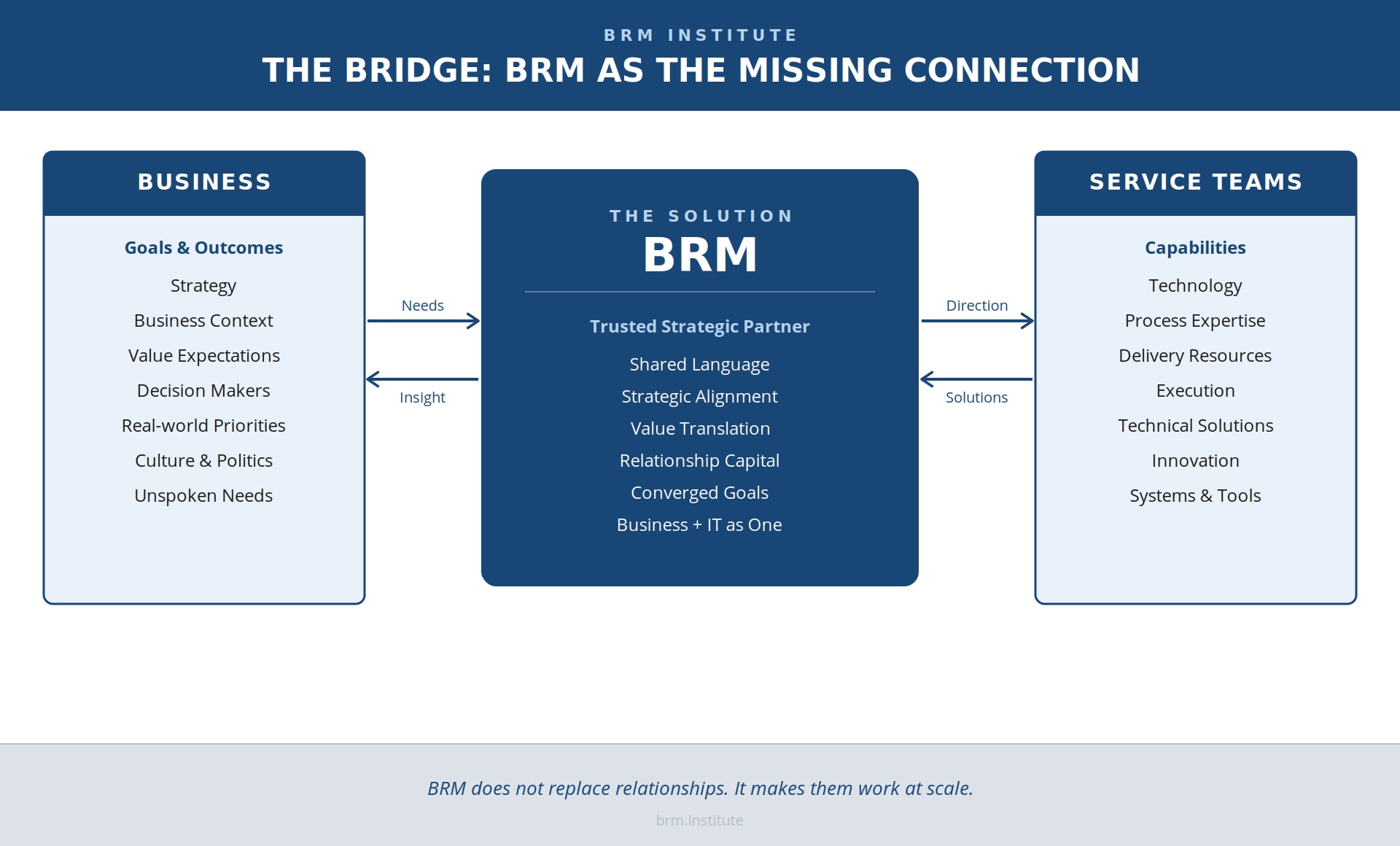
It Is Not Just a Role. It Is How Work Actually Gets Done.
Here is the uncomfortable truth underneath all of this. Everybody was already doing their job. The healthcare IT team built what they were asked to build. HR launched programs they genuinely believed in. Finance and Engineering both had legitimate perspectives. The failure was not competence. It was connection.
That is the thing BRM understands that most organizational frameworks miss. You can have brilliant people, solid processes, and real resources — and still watch initiatives stall, budgets evaporate, and good ideas die in email threads. Because none of that matters if the people involved do not actually understand each other.
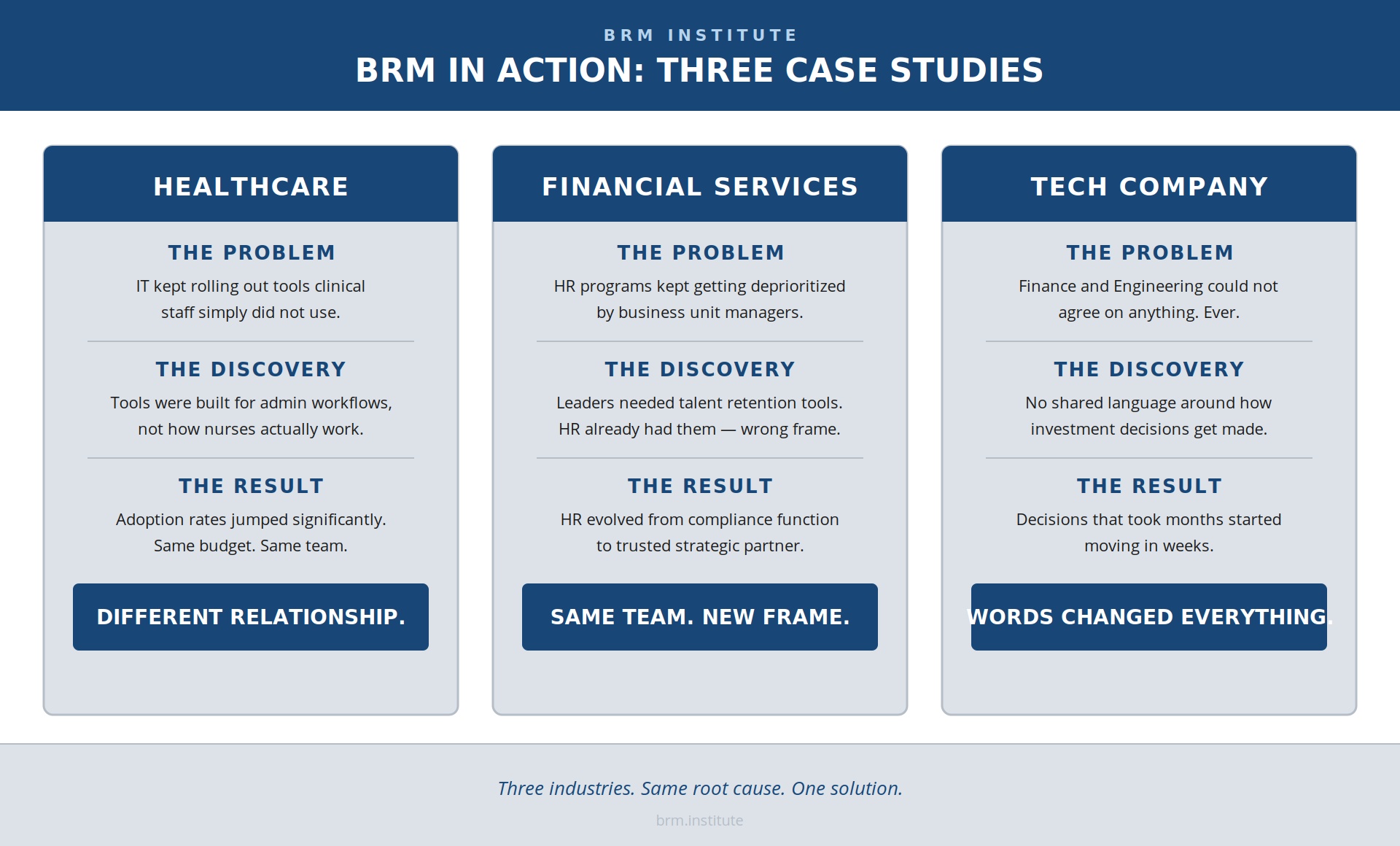
BRM is not just a job title you post on LinkedIn. The organizations seeing the biggest results are building relationship management as a capability across their entire culture — not just hiring one person and calling it done. That means leaders who ask better questions before launching initiatives. Service teams that measure success by business outcomes, not just deliverables completed. A workplace where someone can say “I do not think we are solving the right problem” without it derailing everything.
It is a shift from order-taker to partner. From reactive to strategic. From busy to effective.
The organizations that will thrive in the next decade are not necessarily the ones with the best technology or the biggest budgets. They are the ones where people across functions genuinely trust each other, communicate honestly, and care about outcomes beyond their own department’s scorecard.
Everybody doing their job is the baseline. It was never supposed to be enough on its own. The missing piece — the thing that turns individual effort into collective results — has always been the relationships in between.