The Agent Boom Is Here. Demand Shaping Is How You Survive It.

A business executive I’m working with shared something recently that I keep coming back to.
Their super intelligence (SI) rollout is a real success. Teams across the organization are building their own skills, projects and agents, and the energy is genuine. But every one of those builds touches sensitive client data, so each needs a security and compliance review before it goes live. That review work now competes for the same capacity as everything else already in flight.
Swap “SI agents” for “spreadsheets,” “cloud apps” or “shadow technology,” and it’s the same challenge we’ve faced for decades. What’s new is the speed.
You know AI (Artificial Intelligence), but what is SI?
SI stands for Super Intelligence
And it’s not just one organization. Gartner says 71% of CIOs struggle to prioritize their AI (SI) use cases. Deloitte says only about one in five organizations has mature governance for agents. The tools are moving fast. The way we decide what to build hasn’t caught up.
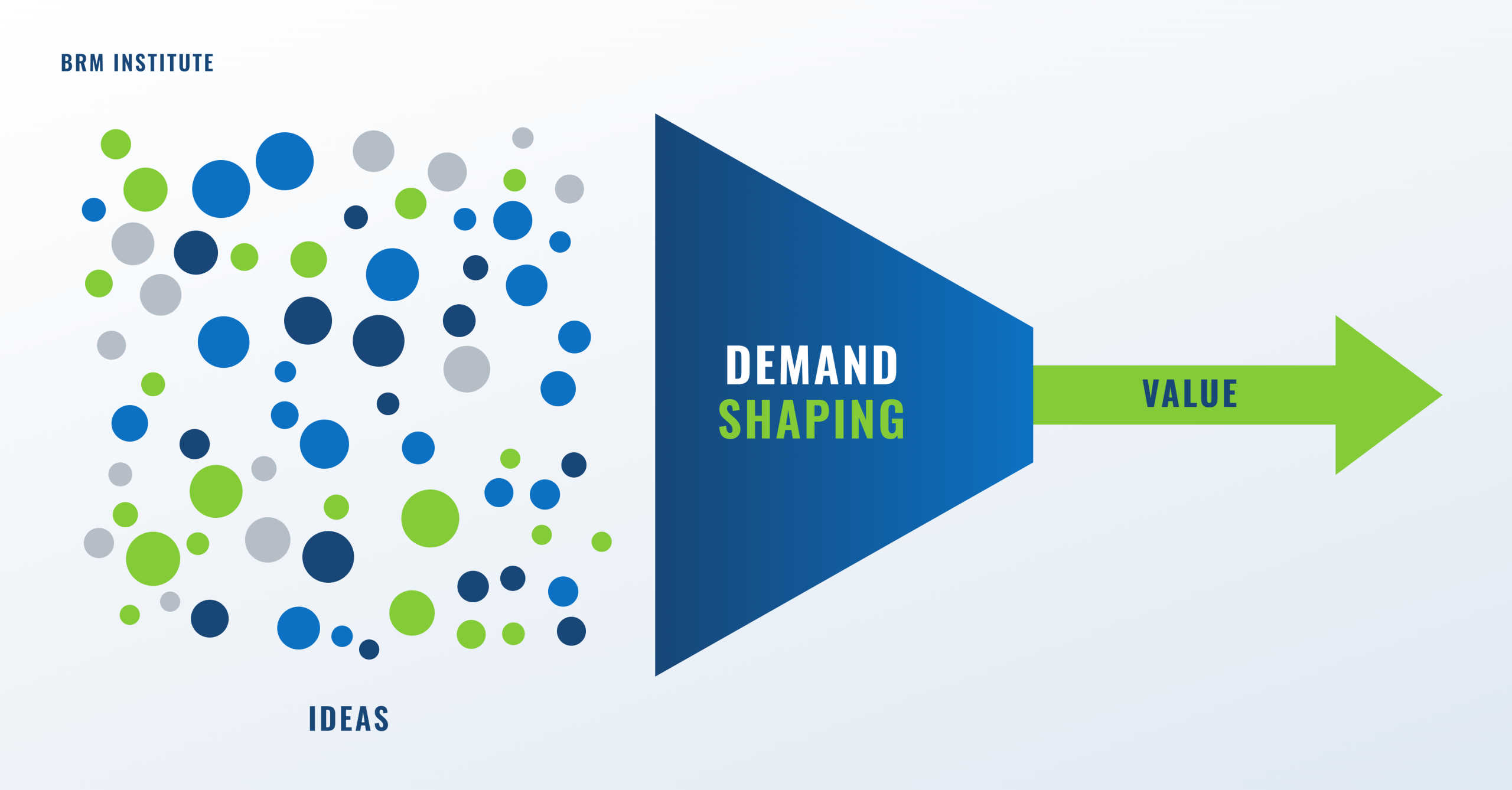
This is exactly where Business Relationship Management earns its keep. Not as a gatekeeper, but as the capability and as the people who shape demand before it ever becomes a backlog.
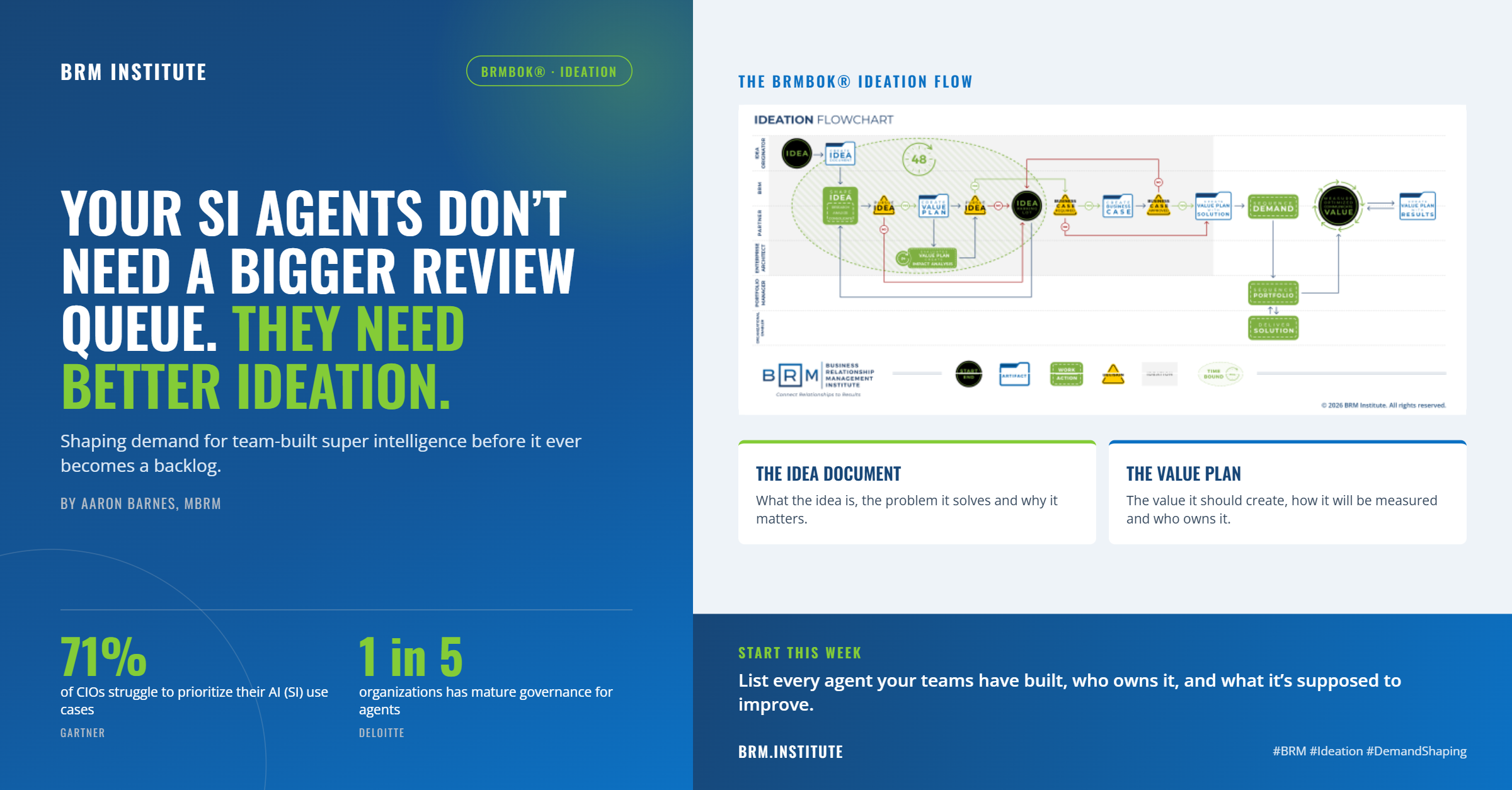
The answer isn’t a bigger review queue. It’s Ideation. In the BRMBOK®, Ideation is everything that happens before an idea becomes a project: inspiration, demand shaping, and the conversations that decide which ideas are worth pursuing. It’s how strong BRMs turn a flood of enthusiasm into focused, valuable work… and fast.
Click image to enlarge
The BRM Body of Knowledge
The BRMBOK content on ideation, relationship management and value management is over 13 years old. It’s had slight tweaks during that time, but it’s fundamentally the same. We’ve had this in place the whole time, and it still holds up through continuous change across teams and organizations.
Two simple artifacts carry an idea the whole way. The idea document captures what the idea is, the problem it solves and why it matters. The value plan spells out the value it should create, how it will be measured and who owns it. Both stay with the idea from the first conversation through delivery and into value realization, so nobody has to guess later what success was supposed to look like.
During ideation, chaos reigns, and that’s by design. Ideas come from anywhere. Some will take days and some will take years. What makes the chaos manageable is visibility. Anyone should be able to see which ideas exist, where they stand and why. Clarity matters more now, not less. Every new agent, role or reorg should be able to answer a simple question: what problem does this solve, and how will it make us better?
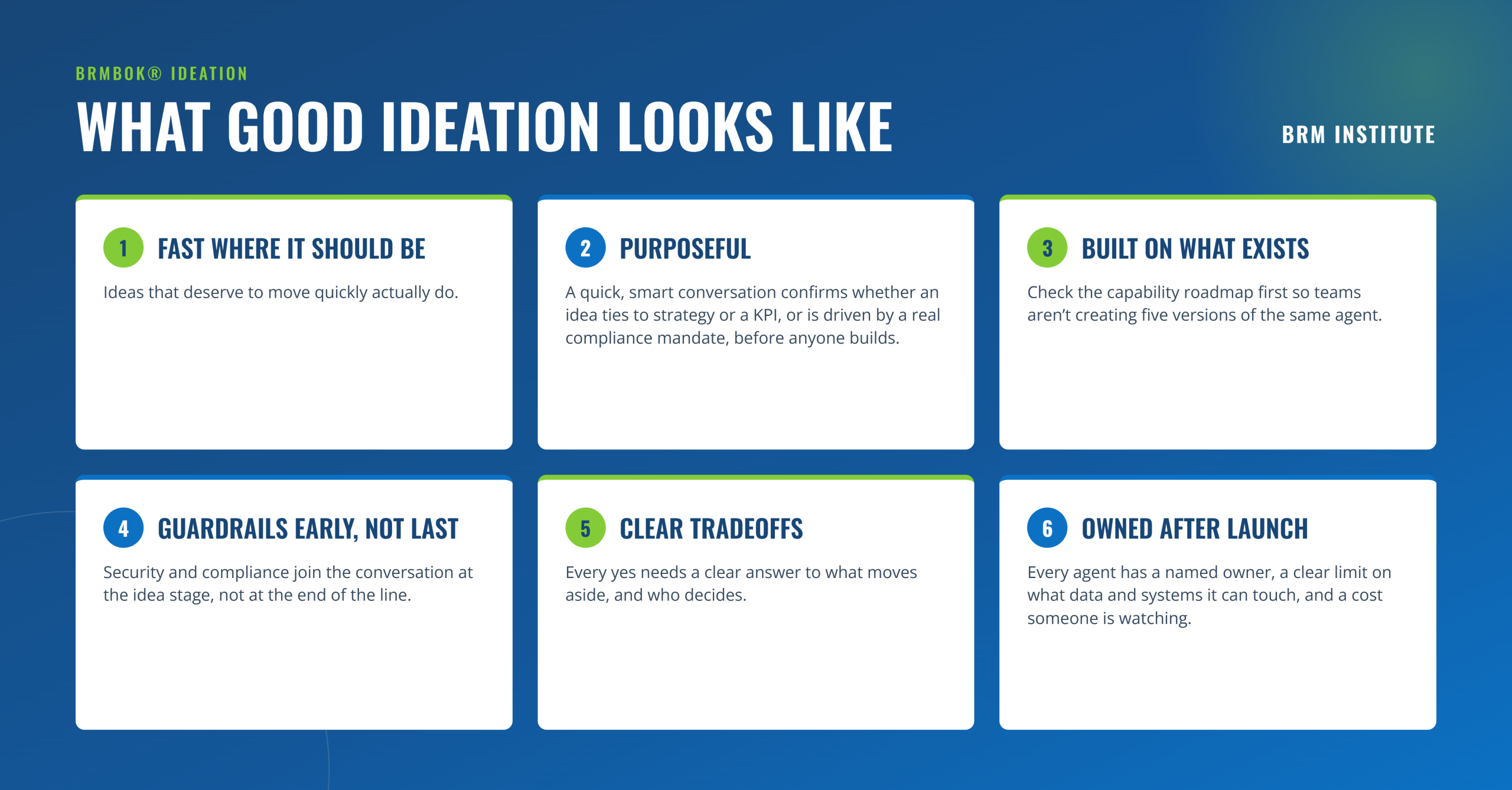
Here’s what that looks like in practice:
- Fast where it should be. Ideas that deserve to move quickly actually do.
- Purposeful. A quick, smart conversation confirms whether an idea ties to strategy or a KPI, or is driven by a real compliance mandate, before anyone builds.
- Built on what exists. Check the capability roadmap first so teams aren’t creating five versions of the same agent.
- Guardrails early, not last. Security and compliance join the conversation at the idea stage, not at the end of the line.
- Clear tradeoffs. Every yes needs a clear answer to what moves aside, and who decides.
- Owned after launch. Every agent has a named owner, a clear limit on what data and systems it can touch, and a cost someone is watching. Agents don’t retire themselves.
Click image to enlarge
A few habits make the difference:
- Save every idea in one shared place.
- Never “kill” an idea. Park it, with the reason it was parked. Parked ideas can come back whenever the timing is right.
- Close the loop. An open idea culture turns into a demotivator fast if people never hear what happened to their idea, or why.
And the idea isn’t done when the agent goes live. It’s done when the value shows up and someone checks. Pick the KPI in the value plan before the build, look at it again 90 days after launch, and retire the agents that don’t earn their keep.
This is demand shaping at its best. You’re not reacting to requests. You’re guiding ideas toward the ones that create the most value and building trust along the way. That’s how a relationship moves from order taker to strategic partner.
You don’t need a BRM title to start. This week, list every agent your teams have built, who owns each one, and what it’s supposed to improve. If that list is hard to make, you’ve found your first problem.
When you’re ready to go further, the BRMBOK from Business Relationship Management Institute (BRM Institute) lays out the full ideation approach, including the idea document and value plan. And BRM Institute’s community is full of leaders working through this exact challenge right now. We’d love to have you in the conversation.
The tools will keep changing. The core question won’t: how do we decide together what’s worth doing, and then do it well?
How is your organization shaping demand for team-built SI?