One Ring to Rule Them All: What Lord of the Rings Teaches Every Business Relationship Manager in the Age of AI
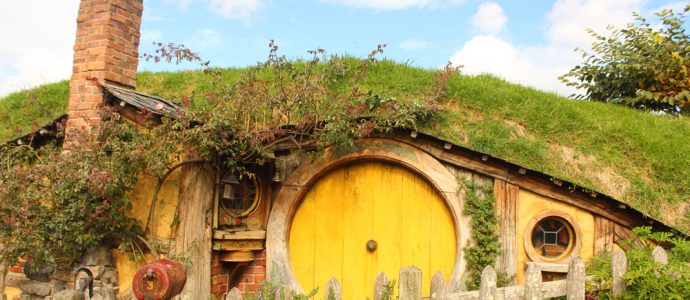
If you’ve ever sat in a status meeting where Finance won’t talk to IT, IT won’t talk to Marketing, and everyone is quietly hoping someone else picks up the One Ring of “digital transformation” congratulations, you already understand 90% of what Gandalf went through.
Business Relationship Management (BRM) has always borrowed its best metaphors from stories about unlikely alliances. Yoda taught us that “value leads to trust, trust builds confidence, confidence leads to influence.” But if Star Wars is BRM’s philosophy class, The Lord of the Rings is its org chart…. and in 2026, with AI rewriting how business and IT collaborate, the Fellowship has never felt more relevant.
Let’s talk about why.
If you’re new here: a Business Relationship Manager is the person whose job is to sit at the intersection of “the business” and “the people who build the things the business needs” usually IT, but increasingly AI, data, and product teams too ….. and make sure those two groups actually trust and understand each other. Not just talk. Trust.
In Tolkien terms, the BRM is Gandalf. Not always the strongest fighter, not always the highest-ranking noble, not even a permanent resident of any one kingdom. But he IS person who has spent decades building enough credibility with Elves, Dwarves, Hobbits, and Men that when disaster strikes, he’s the one who can get them all in a room without someone drawing a sword.
The Council of Elrond Is Just a Very Tense Stakeholder Alignment Meeting
Picture it: representatives from every major faction in Middle-earth, each with their own priorities, budgets (armies), and deeply held grudges, summoned to solve one enormous cross-functional problem.
Sound like your Monday planning meeting?
The Council of Elrond only works because relationships were built long before the crisis. Gandalf didn’t show up to that meeting cold-calling strangers. He’d spent years earning trust with each group, with the Hobbits, with the Elves, with Aragorn. By the time the Ring needed a plan, the relationship equity was already in the bank.
The BRM lesson: You cannot build trust during the emergency. You build it in the boring, unglamorous quarters between emergencies …. the check-ins nobody thinks matter, the “just wanted to see how things are going” coffee chats. Those are your Council of Elrond insurance policy.
Boromir and the Very Human Temptation to Hoard Budget
Boromir isn’t a villain. He’s just a guy who genuinely believes his own kingdom could use the Ring’s power better than anyone else ….faster, more efficiently, with fewer committee meetings. Swap “the Ring” for “the new AI tooling budget” and you’ve got roughly 40% of pitches in 2026.
Every organization has a Boromir moment: a team convinced that if they could just control the powerful new thing themselves skip the governance, skip the cross-functional buy-in they’d move faster and deliver more value. And they might, for a scene or two. But Tolkien is pretty clear about how that story ends.
The BRM lesson: Value hoarded by one department, however well-intentioned, is value the rest of the organization never gets to use. Part of the BRM’s job is catching the Boromir moment before it happens making the case for shared stewardship over unilateral control, especially now that “the Ring” increasingly means AI capability, data access, or automation tooling that’s genuinely dangerous when siloed.
The Fellowship Breaks Apart — And the Mission Survives Anyway
Here’s the plot twist that should be required reading for every BRM: the Fellowship fails, structurally, about a third of the way through the story. Boromir falls. The group splinters into three separate paths. On paper, that’s a total breakdown of the plan.
And yet the mission survives because the relationships built before the breakup didn’t depend on the group staying physically together. Merry and Pippin, on their own, manage to rally an entirely different kingdom to the cause. Aragorn, Legolas, and Gimli keep the alliance alive on a completely separate front. Frodo and Sam just keep walking.
The BRM lesson: Org charts change. Reorgs happen. Your best stakeholder gets promoted, transferred, or poached by a competitor with a better parking situation. If your influence was built as relationships rather than reporting lines, the mission survives the reorg. If it was built on a single point of contact, it doesn’t.

Nobody Gets to Mount Doom Alone (Not Even the Ring-Bearer)
Frodo is, technically, the one carrying the mission. But Frodo doesn’t make it up Mount Doom under his own power Sam carries him, physically, the last mile. And the eagles show up at the exact right moment because of a relationship Gandalf built three books earlier, with an entirely different character, for reasons that had nothing to do with this specific crisis.
That’s strategic influence, cashed in on a delay so long most people would’ve forgotten they’d made the investment.
The BRM lesson: The relationships that save your project are rarely the ones you built for that project. They’re the ones you built two years ago, for a completely different reason, that happen to be exactly what you need now. This is, not coincidentally, the entire argument for why “relationship management” is a discipline and not just a task you do when you need something.
Why This Matters More in 2026 Than It Did in 2001
When Peter Jackson’s Fellowship first hit theaters, “digital transformation” meant getting your company a website. Today, BRMs are the ones standing between business leaders excited about AI’s promise and technical teams trying to explain, patiently, why you cannot simply point an LLM at the customer database and hope for the best.
AI has raised the stakes on almost everything this article just described:
- Trust matters more, because AI initiatives move fast and fail publicly when governance is skipped.
- Hoarding is more tempting, because AI tools feel like personal superpowers until the compliance team finds out.
- Cross-functional fluency is non-negotiable, because AI touches every department at once, the same way the Ring’s fate touched every kingdom in Middle-earth.
- Long-game relationships pay off unpredictably, because you genuinely do not know which stakeholder relationship you’ll need in eighteen months when the next AI-shaped crisis lands on your desk.
Here’s the thing Tolkien couldn’t have known: none of this is instinct. Gandalf’s ability to move between kingdoms and broker trust didn’t come from nowhere it came from centuries of deliberate practice. BRM works the same way. Trust-building, influence, and cross-functional fluency aren’t personality traits some BRMs are lucky enough to have; they’re competencies, and they can be developed the same way any other discipline is developed.
That’s exactly what the BRM Competency Model maps out the specific, learnable skills that separate a BRM who’s reacting to AI initiatives from one who’s shaping them. It’s one of the resources available to BRM Institute members, and if you’ve ever finished an article like this one thinking “okay, but how do I actually build that kind of influence,” that’s where to go next.
The BRM who spent 2024 and 2025 quietly building trust across IT, data, security, and business leadership is the BRM who gets invited into the 2026 AI roadmap conversation before the budget’s already spent. The BRM who didn’t? They’re finding out about the new AI pilot from a Slack announcement, same as everyone else.
The Takeaway (No Elvish Translation Required)
You don’t need to have read the appendices to get the point: relationship management isn’t a soft skill you layer on top of “real” work. It’s the infrastructure that determines whether the real work survives contact with a crisis. Gandalf didn’t carry the Ring. He carried the network of trust that made everyone else’s ability to carry it possible.
The good news is that network isn’t a gift some BRMs are born with it’s built through the same competencies laid out in the BRM Competency Model, available to explore as a BRM Institute member.
That’s the job. May the BRM force, and the Fellowship be with you.