2026 BRMConnect: Speakers, Sessions & Why You Should Attend

Every industry has “must-attend” events. Most of them oversell the “must” part. BRMConnect doesn’t have that problem — attendees have consistently rated it the most valuable event in the industry, and the majority say they’d bring their CXO next time. That’s not conference marketing talk. That’s what happens when people leave with tools they actually use on Monday morning.
This September 21–23 in Denver, the World BRMConnect Conference returns for its 13th year, and the theme couldn’t be more timely:
The Human Edge.
Why “The Human Edge,” and Why Now
Every organization is racing toward AI right now. Fewer are asking the harder question: once the tools are in place, what still has to be human? BRMConnect 2026 is built around the answer — influence, trust, judgment, and the kind of relationship capital that no algorithm can replicate. Whether you’re new to the BRM discipline or leading it from the C-suite, this year’s sessions are designed to arm you with exactly that: the human superpowers AI can’t touch.
Attendees move through five tracks, each built for a different stage of the journey — from Mastery & Legacy (building capabilities that outlive any one role or initiative) to Anticipatory Value Orchestration (leading human-AI convergence before it’s demanded of you). Wherever you are in your career, there’s a track built for the problems you’re actually solving right now.
Keynotes that speak to the human side of leadership
Malini Jayaganesh opens with Walk Fast, Walk Far, tackling a tension every BRM knows in their bones: the pull between moving fast and bringing people with you. Drawing on lived experience, she’ll unpack what it actually takes to build momentum that lasts — collaboration optimized for both speed and endurance, not one at the expense of the other.
Dr. Dawn Belamarich brings You First: The Secret to Leading Everyone Else — a keynote built on a simple, uncomfortable premise: you can’t lead others well until you lead yourself honestly. Drawing on her path from licensed clinician to executive leader, Dawn introduces the internal “Committee” that keeps even accomplished leaders spinning instead of moving, and hands attendees a practical framework for quieting it. Walk away with a name for your inner critic and permission to stop waiting to feel ready.
Sessions You Won’t Want to Miss
The breakout and workshop lineup reads like a cross-section of the BRM world’s sharpest practitioners — and it goes well beyond theory.
On leading through disruption: Leanne McGiveron, Sonia Ardeel, and Barbara Brinson team up for Connection: Three Women, Three Journeys, One BRM Mindset — a candid panel on navigating job elimination and turning career disruption into momentum through the very BRM skills they teach. Jessica Sudduth’s Performing Under Fire! Resilience in a Time of Significant Cultural Shifts opens with her own story of surviving a toxic workplace and turns it into a practical playbook for protecting yourself and rising stronger.
On building trust that actually holds: Anita Charlot’s Trust as Infrastructure is one of the most personal sessions on the docket — she’ll walk through leading tech initiatives while managing crisis care for her mother with dementia, and what that taught her about vulnerability, capacity, and why AI adoption without trust is “building on sand.” Ken Fanta’s The Bridge that Started to Break digs into a deceptively common problem: relationships that depend on you personally instead of on durable, system-level trust. Shatha Dweik takes a sharper angle in Can You Trust Me? No, You Can’t… But You Will, breaking down the actual mechanics of trust — credibility, reliability, self-orientation — and why the BRMs who earn trust fastest aren’t the most polished, but the most consistent.
On turning value into action: Peter Lijnse’s 90-minute workshop, Moving Targets: Building Value and Impact Statements That Hold Up When Everything Changes, tackles the question every BRM eventually hits — what happens to your value statement when the ground shifts mid-project? Jay Benoit’s Seeing the Business, the Way the Business Sees It uses capability modeling as a trust engine to move BRMs from tactical support into strategic dialogue. Tyeasha Harris rounds this out with Partnerships with a Purpose, a framework for moving beyond transactional relationships into partnerships grounded in shared purpose and outcomes that matter.
On navigating change without a playbook: Rayma Vinyard-Jacoby and Philip Wehrenberg bring real examples from inside the USDA in This Wasn’t in the Playbook: Change Leadership on the Fly. Tommy Kile’s BRM Unbound: Going Where the Business Needs You traces what happened when his scope grew from a single process to nearly a third of his company — and what he learned when clarity stopped showing up on its own. Jennifer Ersland’s Buy-In to Breakthrough explores how to shift mindsets through intentional conversation instead of pushing harder.
On AI, what actually changes for BRMs
On AI, and what it actually changes for BRMs: Andrea Pence — this year’s emcee — also takes the stage with Making AI Stick: Enterprise Enablement in Action, sharing the concrete initiatives (an AI Ideas Campaign, an AI Ambassador Community, enterprise-wide AI webinars) that are driving real adoption at Abbott. John Krogh’s The Human Edge Under Pressure goes further, arguing that the next evolution of the profession isn’t just managing relationships — it’s Business Relationship Intelligence: understanding the human and organizational dynamics that determine whether trust actually produces movement. Kimball Lovin and a Cleveland Clinic partner join for a session on how AI is reshaping the BRM role from relationship manager to intelligent orchestrator, and Ramsay Gonzalez gives a live 20-minute demo of a platform built around the full BRM lifecycle.
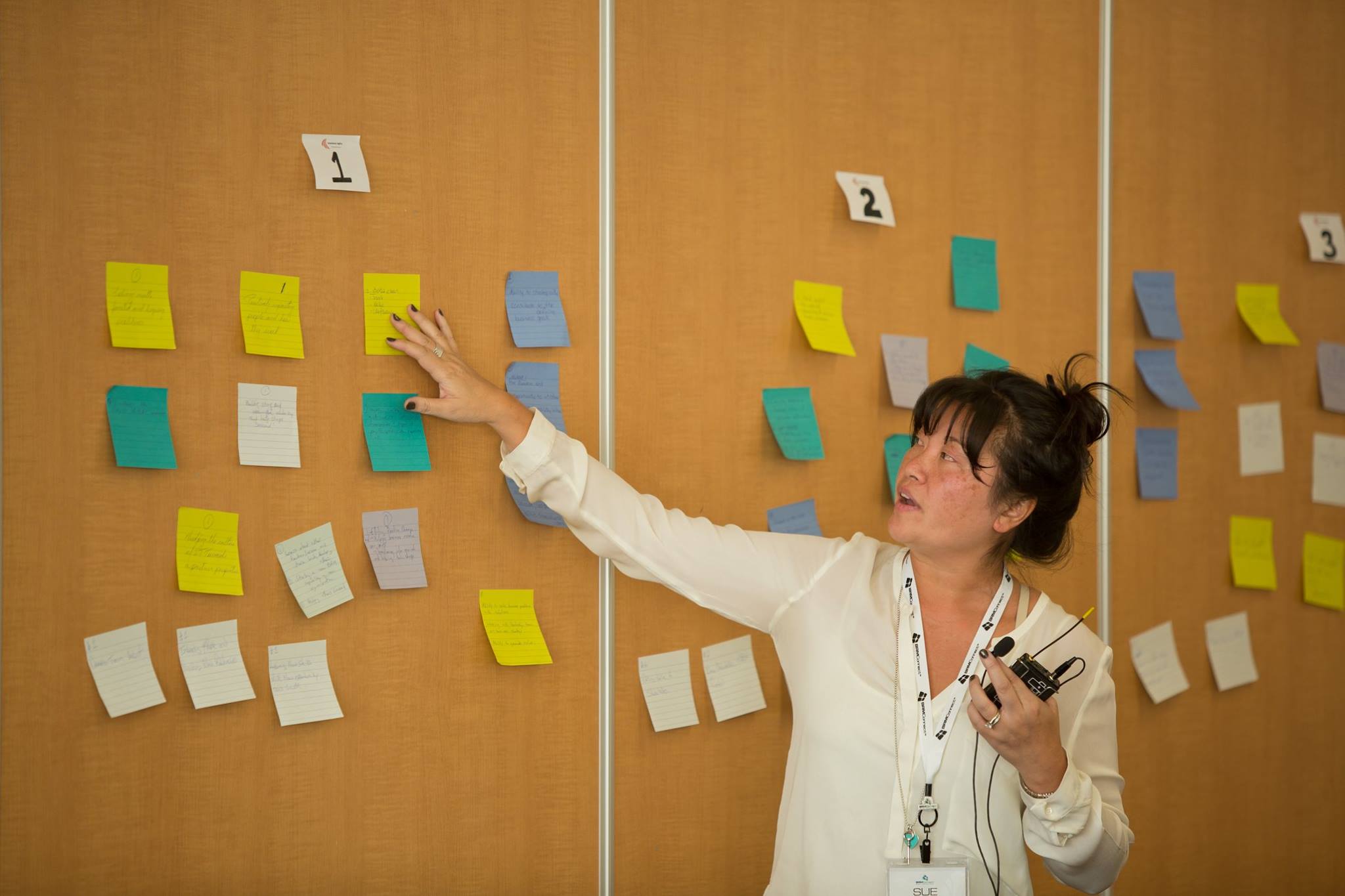

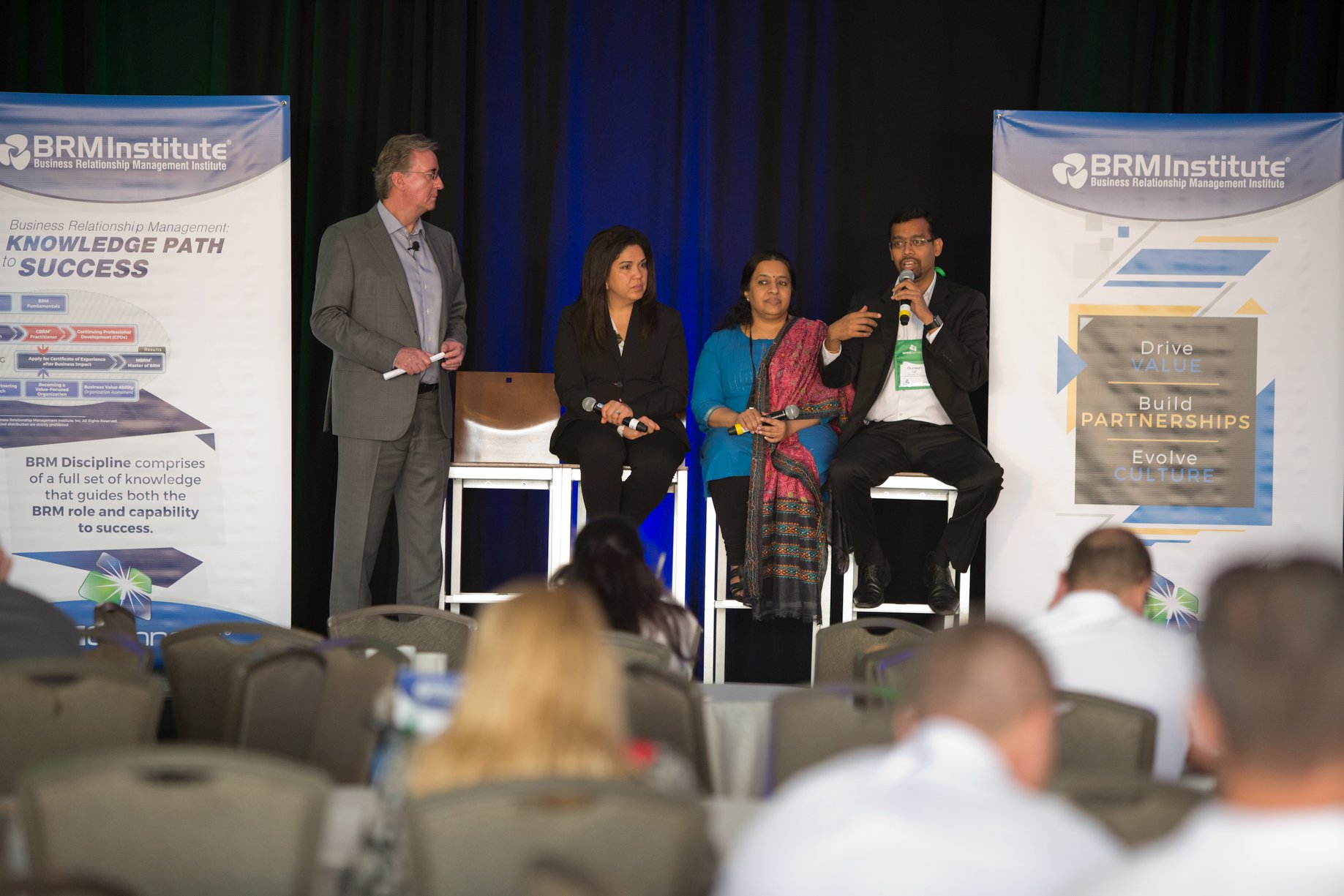
And a few sessions that make the case with a smile: Larry Hibbs uses How to Train Your Dragon as a framework for building relationships from the ground up in How to Train Your Business (Dragons). David Prater borrows from the world of concert touring for One Show, Multiple Teams: What a Rock Tour Teaches About Alignment at Scale — a look at why execution breaks down in the handoffs, not on stage. And Kip Fanta closes strong with Courageous Conversations, a session on having the conversations organizations need most but avoid the hardest.
That’s on top of sessions from Angela Misir-Swindler and Dr. Jericha Hopson on network weaving and neuroinclusion, Aaron Monroe on inviting innovation at JP Morgan Chase scale, Kimarley Mowatt on what really drives stakeholder buy-in, Suresh GP on experience management as a trust-building discipline, and Allison O’Brien’s deeply personal Listening… and My Existential Crisis — with more still being announced.
The Case for Bringing Your Whole Team
BRMConnect isn’t built for solo attendance and a stack of notes nobody reads afterward. It’s built for teams — which is why so many attendees bring their executives, and why the discounts stack for groups. Three days of hands-on workshops, panels, and keynotes, all designed to move straight from the session room into your next stakeholder conversation.
If you’re on the fence, here’s the honest pitch: this isn’t a conference about BRM in the abstract. It’s a room full of people who’ve been in your exact situation — the fragile alignment, the stalled buy-in, the relationship that depends too much on you personally — telling you exactly what they did about it.
September 21–23, 2026 | The Inverness Denver, a Hilton Golf & Spa Resort | Use code BRMC
Registration and full agenda: brmconnect.com